The idea behind one of the world’s largest engineering and science competitions for students dates back to 1939, when Shell’s research director at the time made a friendly bet with his colleagues to see who could travel the furthest using the same amount of fuel. Shell has organised the competition in its current format across several continents since 1985. The event held at the end of last week brought together ambitious teams from two continents, Europe and Africa. One of the greatest challenges facing participants is to build a vehicle capable of travelling the longest possible distance using one litre of fuel or the equivalent of 1 kilowatt-hour of energy.
Teams can enter in three energy categories: internal combustion engines powered by petrol, diesel or ethanol; battery-electric powertrains using lithium batteries; and hydrogen fuel cells, which generate electricity from hydrogen gas. The competition focuses on two types of vehicles: Prototype vehicles, which represent technological innovation, and UrbanConcept vehicles, which are designed with road use in mind. Participants must first pass a technical inspection before competing against each other in the energy efficiency events.
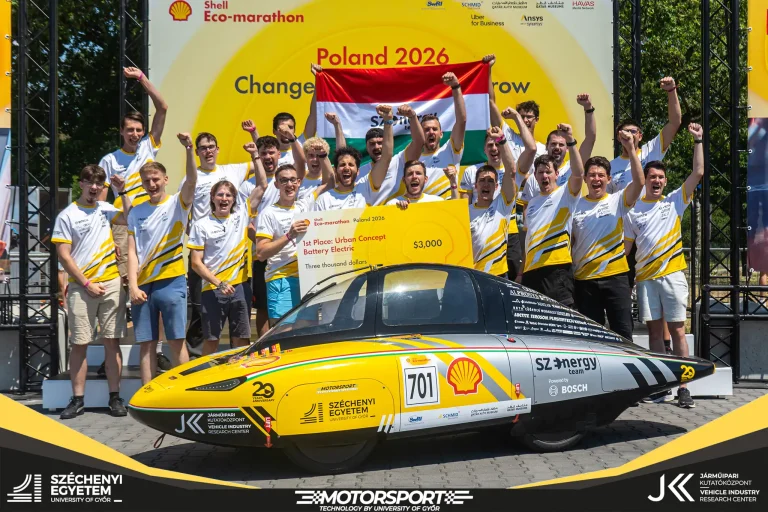
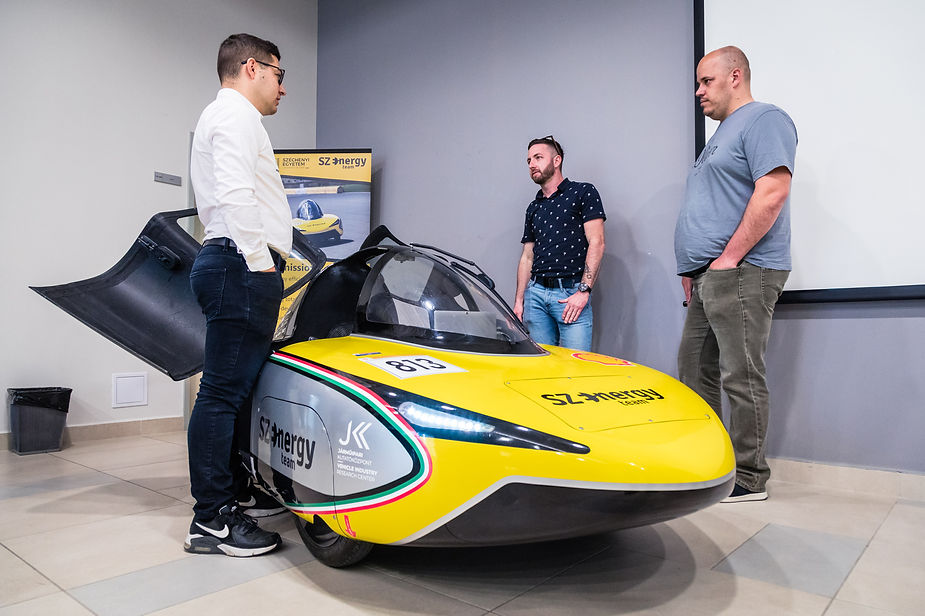
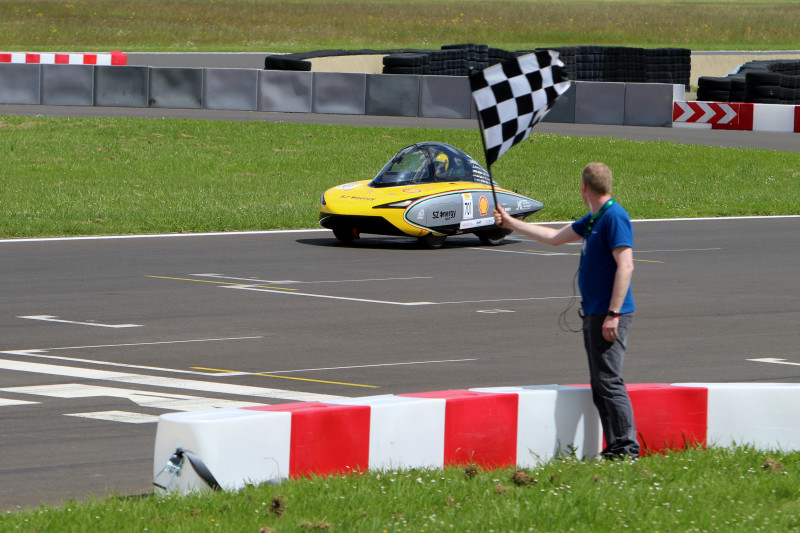
At the Shell Eco-marathon in Nogaro, SZEnergy Team finished first in the energy efficiency UrbanConcept category for the third time, once again breaking its own world record from the previous year. Before taking to the track, the team’s vehicle passed the detailed technical inspections with the maximum possible score. The team secured first place in its category with a new world record of 309 km/kWh, improving on its previous world-record result of 291 km/kWh. Prior to this, SZEnergy Team also took first place in the autonomous driving event, which tests self-driving functions.
“We carried out extensive testing and simulations to ensure that we could start the runs with the best possible settings. Fortunately, the weather also improved by the day of the energy efficiency competition, allowing us to exceed even our own expectations, improve on last year’s world record and win the category for the third consecutive time.”
– said Balázs Für, leader of SZEnergy Team.
Shell’s primary goal in creating the Eco-marathon was to inspire future generations to innovate and create. The company recognises every participating team for developing new technologies and showcasing innovations, while Shell Hungary is particularly proud of the Hungarian successes achieved over the years.
Three Hungarian teams participated in this year’s competition: BME SharkTeam from Budapest University of Technology and Economics, Kandó Racing from Kecskemét SZC Kandó Kálmán Technical School, and SZEnergy Team from Széchenyi István University.
Source: Márkamonitor