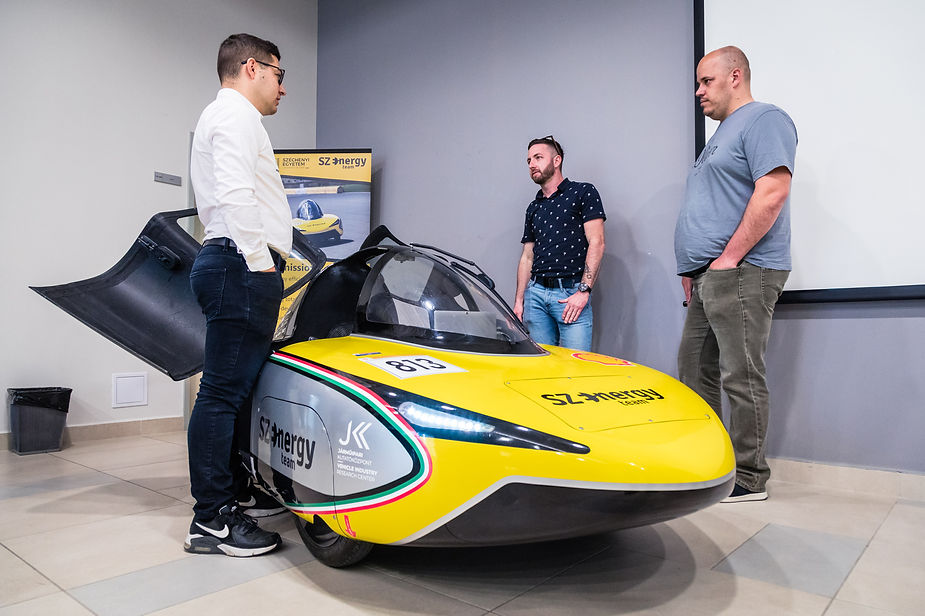
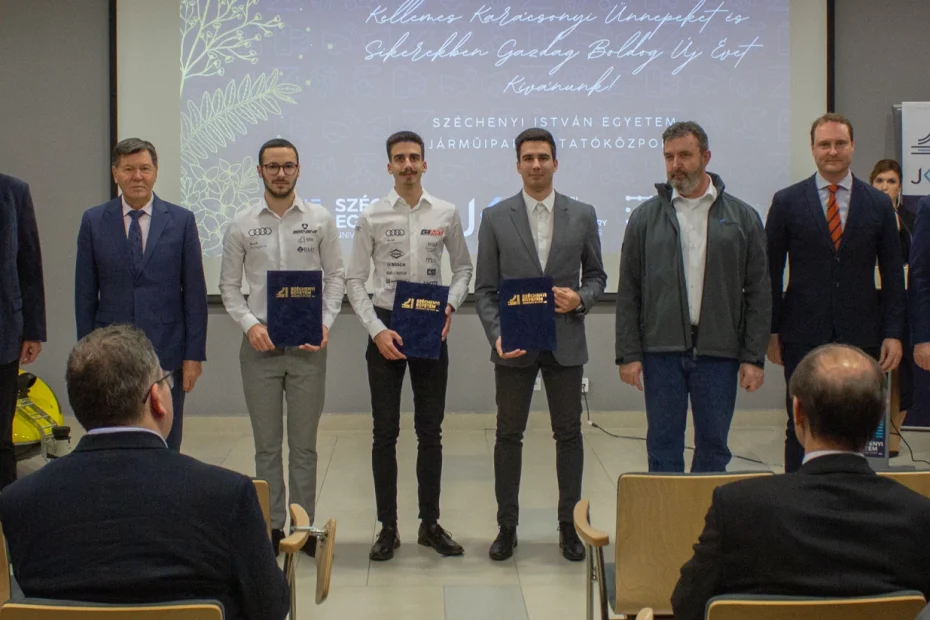
The Shell Eco-marathon is one of the world’s most prestigious energy efficiency competitions, where students from leading technical universities compete with their self-developed, low-consumption vehicles. The student team of Széchenyi István University, SZEnergy Team, which celebrates its 20th anniversary this year, has long been a participant in the competition — and with remarkable results. The students won the electric category with world records in 2022, 2023 and 2024, so they travelled to this year’s event as defending champions. The competition was held at the Silesia Ring in Poland between 10 and 15 June.
Once again, the competition brought success for the team from Győr. They confidently secured first place, improving last year’s world record of 309 kilometres per kilowatt-hour to 327 kilometres per kilowatt-hour.
This means that the vehicle named SZEmission completed the designated distance with such low energy consumption that, converted into a comparable figure, it would have been capable of travelling 327 kilometres using just one kilowatt-hour of energy — equivalent to the consumption of a 100-watt light bulb running for only ten hours. This put the team 30 percent ahead of the teams from Çukurova University in Turkey and the University of Toulouse in France. The value of the victory is further increased by the fact that they also outperformed prestigious institutions such as Trier University in Germany, Politecnico di Milano in Italy and the National Technical University of Athens in Greece.
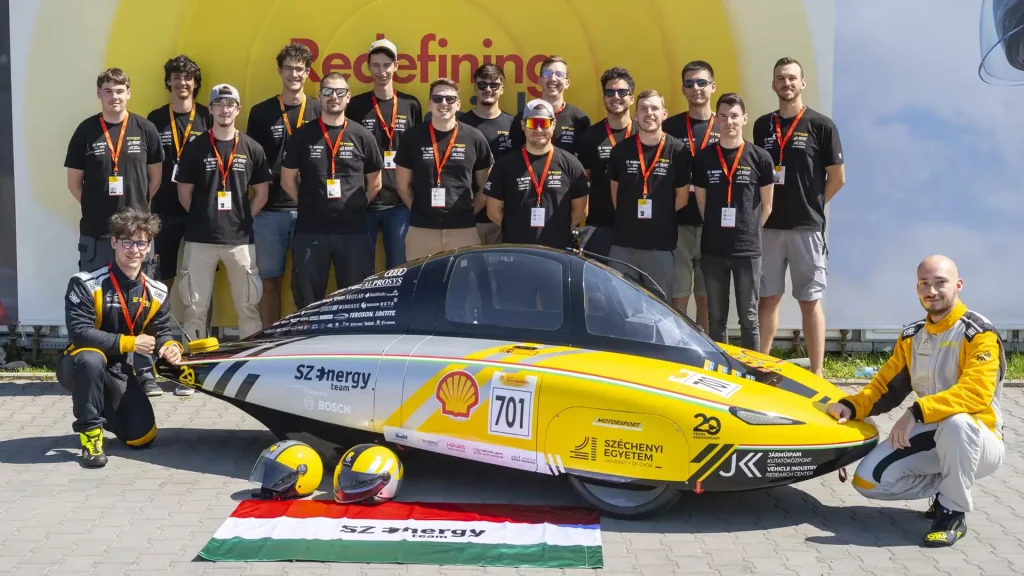
Behind this outstanding result stands the practice-oriented approach of Széchenyi István University and its innovation-supporting environment. SZEnergy Team has long benefited from the support of the university and its Vehicle Industry Research Centre, as well as from its industrial partners, and continues to operate with an increasingly professional background.
Balázs Für, leader of SZEnergy Team, said he was extremely proud of the team’s performance.
“On the very first day, we achieved a result of 299 kilometres per kilowatt-hour. We completed this as a safety run, focusing primarily on making sure that we reached the finish line within the specified time limit. On the second day, we encountered technical problems that had not occurred during testing, mainly because we had not previously been able to test under such hot conditions. We managed to resolve these issues and first achieved 318, followed by 327 kilometres per kilowatt-hour on the final day.”
– he recalled. He highlighted the team’s preparation, unity and excellent community spirit as key factors behind the success. He added that the mentors and supporters — including the university and the Vehicle Industry Research Centre — also contributed greatly to the achievement by providing ideal conditions for preparation and competition. Nearly thirty team members travelled to the event, where another challenge was that, instead of competing on the familiar Nogaro circuit in France, they had to perform at Poland’s Silesia Ring, a circuit previously unknown to them.
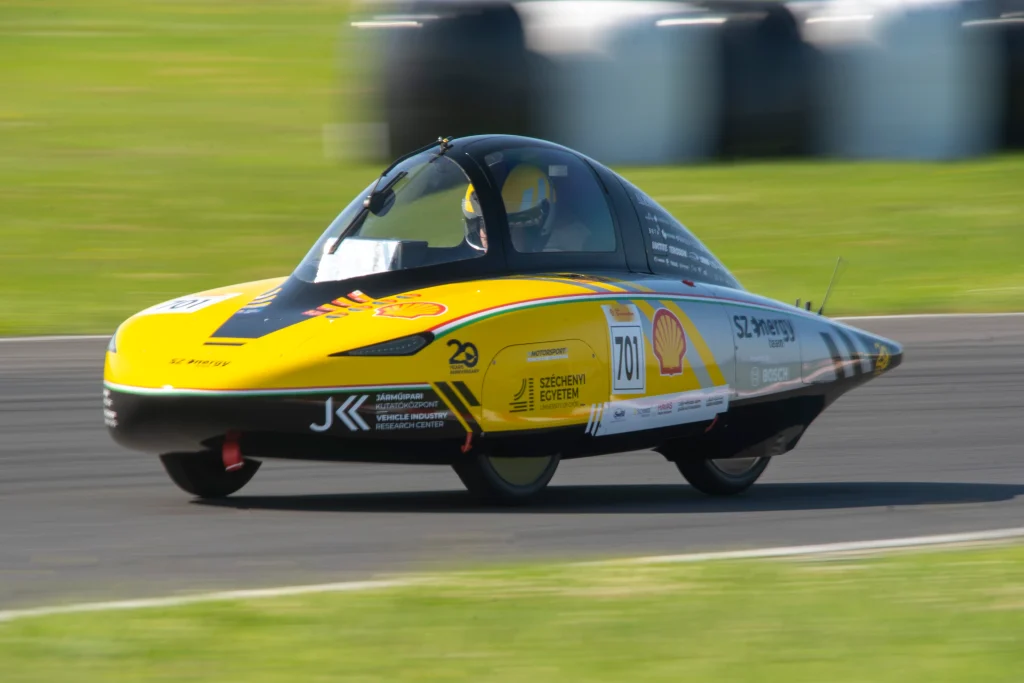
“The result we achieved even exceeded the figures calculated in our preliminary simulations, which shows that our developments — such as the new electronic system and redesigned suspension — worked even better than expected. Our car does not have a single outstanding component, but every part of it is very good, and together they work even better.”
– said Balázs Für. In closing, he emphasised that the team would naturally celebrate first, before soon jointly determining the next directions for development. His final sentence was not good news for their rivals: “We learned a great deal from this competition, and our goal is to return next year with an even more competitive vehicle.”
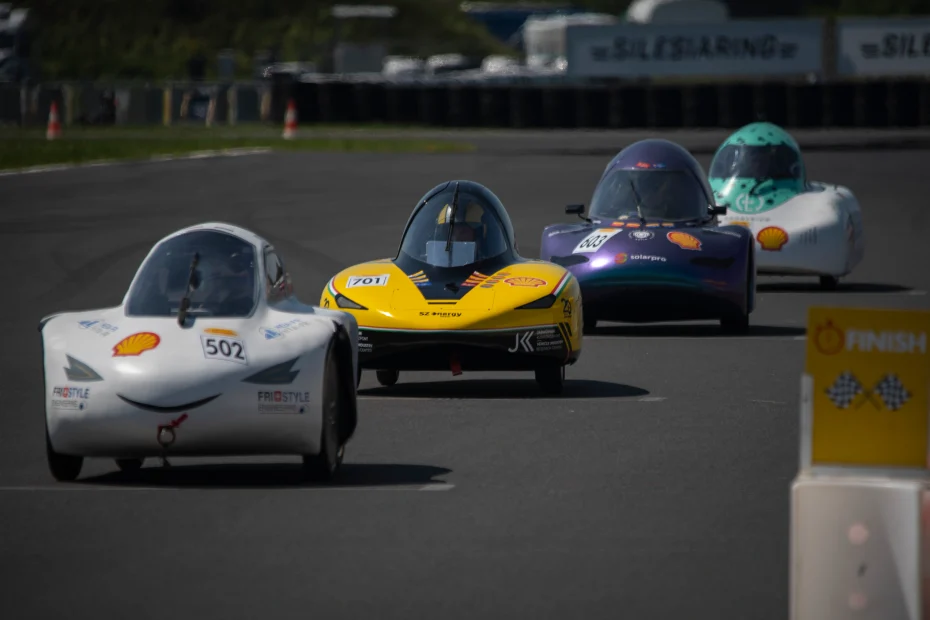
Source: Széchenyi István University