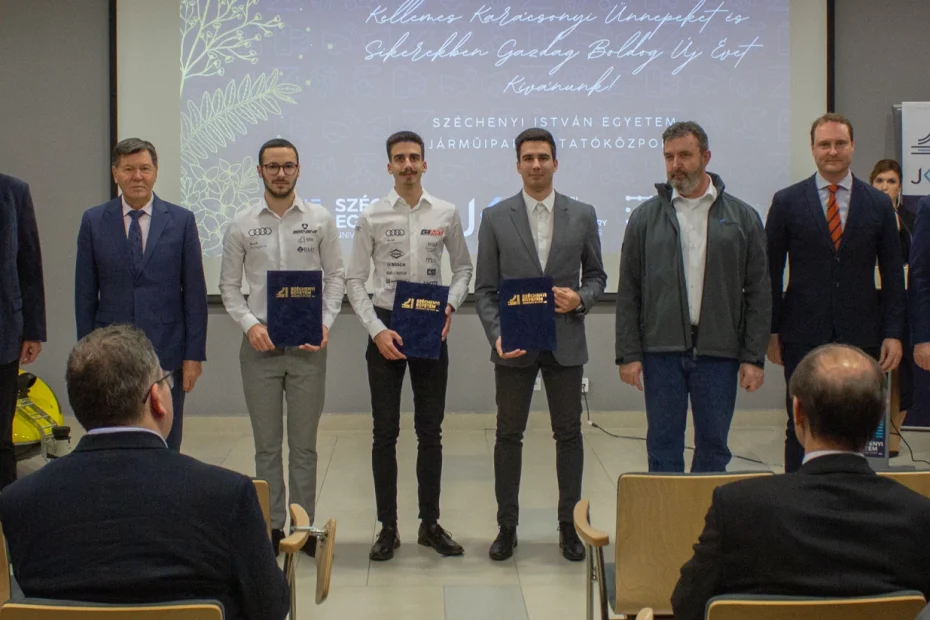
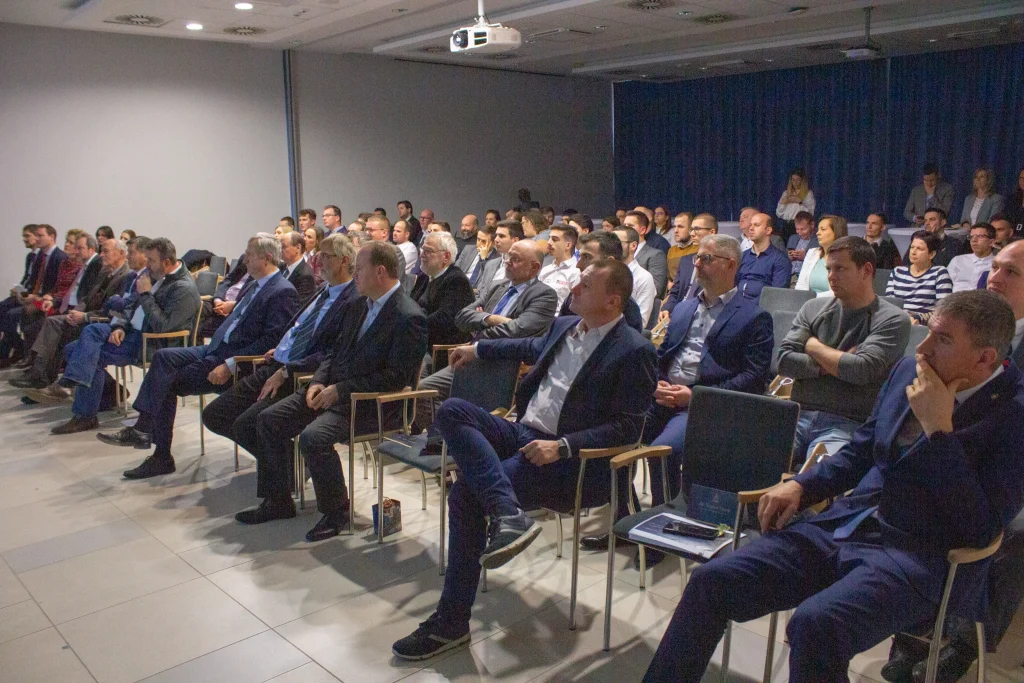
Széchenyi István University’s Vehicle Industry Research Center (JKK), which celebrated its tenth anniversary this year, is working to address the most pressing challenges shaping the future of mobility and has become one of Hungary’s key players in the field in recent years. The organisational unit reviewed its achievements from 2022 at a ceremony.
At the event, Professor Dr László Palkovics, Chairman of the Board of Trustees of the Széchenyi István University Foundation, which maintains the university, outlined the institution’s vision for the future. He explained that the university’s automotive focus would be further strengthened by new assets – including Autóipari Próbapálya Zala Kft., ZalaZONE Ipari Park Zrt. and HUMDA Hungarian Mobility Development Agency Plc. – which, following a decision by the Hungarian Parliament, would be transferred to the ownership of the foundation. He added:
The aim is not only for Széchenyi István University to become one of Europe’s leading automotive universities. The institution also intends to place strong emphasis on other fields, including health technologies, energy, agricultural technologies and research related to the defence industry.
The Chairman of the Board of Trustees stressed that success would only be possible by involving excellent Hungarian and international partners in this work. He highlighted in particular the expansion of educational and research relations with Asian and German institutions, as well as stronger cooperation with Hungarian universities.
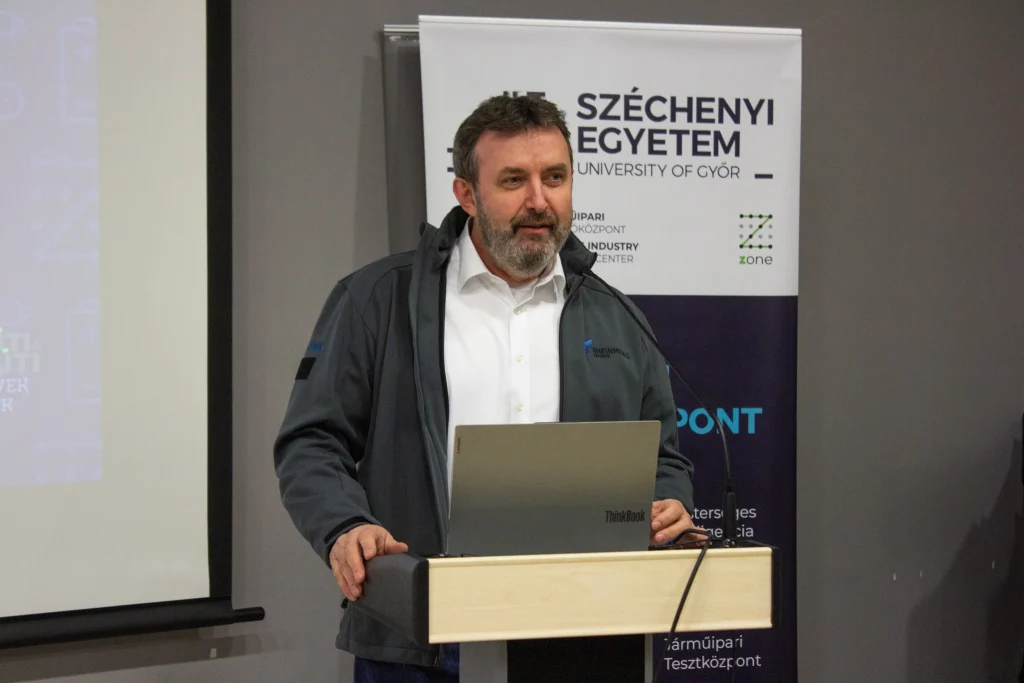
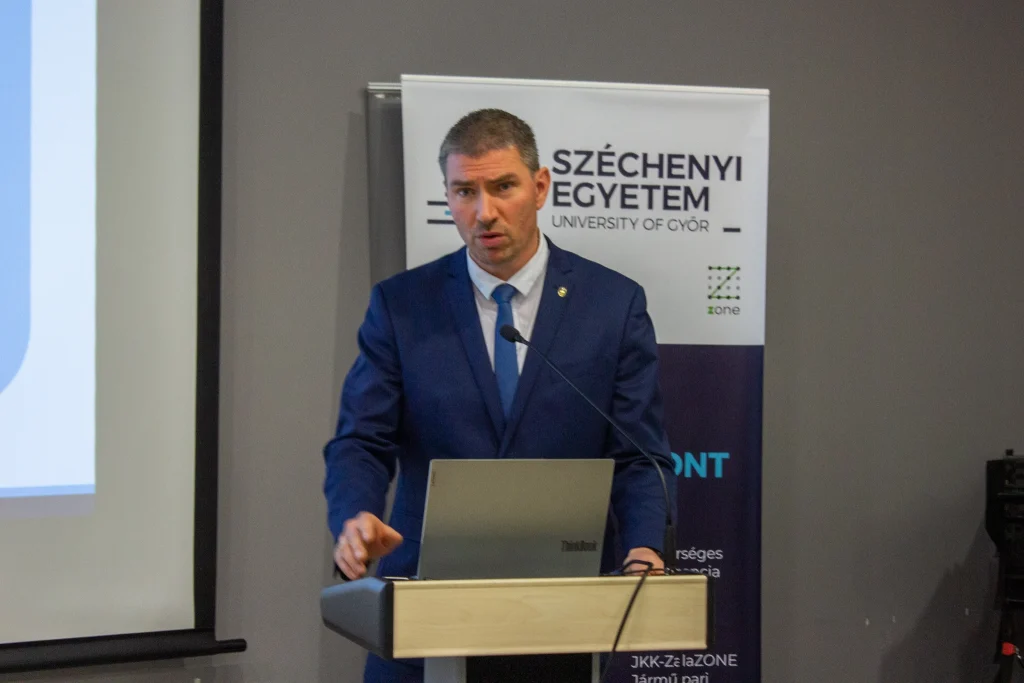
Dr Ferenc Szauter, head of JKK, spoke about the successful work carried out during the year by the centre’s units focusing on artificial intelligence, e-mobility, autonomous transport systems, Industry 4.0 and automotive testing at ZalaZONE. Their work was supported not only by partners but also by numerous projects. The research results were also reflected in publications appearing in prestigious international journals. He pointed out that a decade ago JKK began its activities with 14 employees, while today the number of staff has grown to nearly two hundred. Another sign of development is that colleagues are now also working at ZalaZONE, where they made a significant contribution to this year’s achievements. He added that their activities are supported by excellent infrastructure and state-of-the-art testing equipment.
It was also noted at the event that JKK organised six workshops and two conferences this year and carried out eight demonstrations at the ZalaZONE test track. Three members of staff – Dr Szabolcs Kocsis Szürke, Dr Dániel Pup and Dr Krisztián Horváth – earned academic degrees, while István Szalay, Dr Dénes Fodor and Zoltán Pusztai received awards for the best scientific paper and presentation at international conferences.
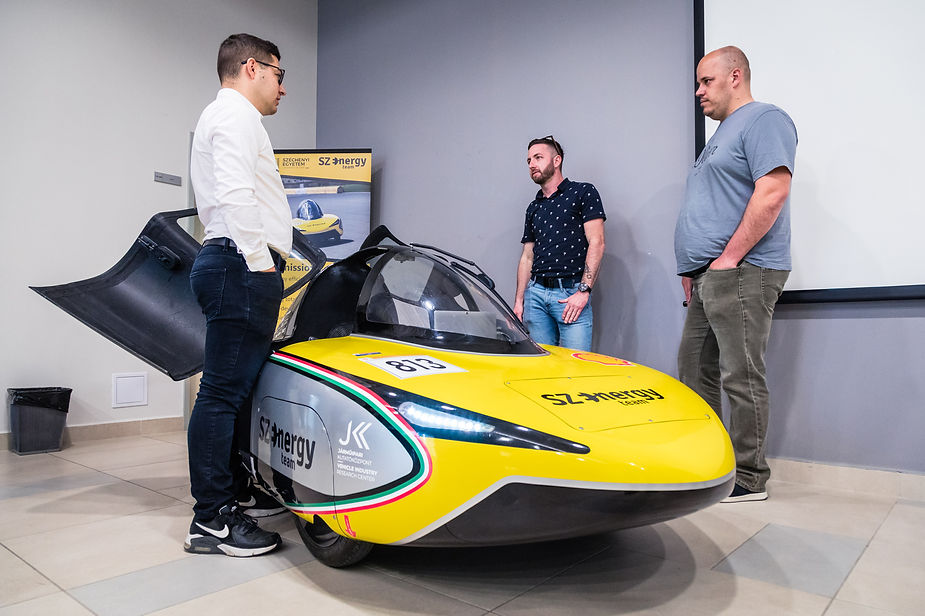
The ceremony also recognised the outstanding achievements of the student teams mentored by JKK. Arrabona Racing Team was almost impossible to keep off the podium during the prestigious Formula Student series in the summer: after finishing second in Austria, the team won a bronze medal at the Hungaroring, followed by another second place overall in Germany to crown the season. SZEngine, the university’s independent engine development team, played a major role in these successes. SZEnergy Team, Széchenyi István University’s student team developing an energy-efficient vehicle, also completed an impressive year. The team won Europe’s largest energy efficiency competition, the Shell Eco-marathon, with a world record, finishing ahead of teams from major technical universities including Munich, Toulouse and Milan. This was followed by another international success in Nogaro, France, where the team finished second in the Shell Eco-marathon Autonomous Challenge for teams developing self-driving vehicles.
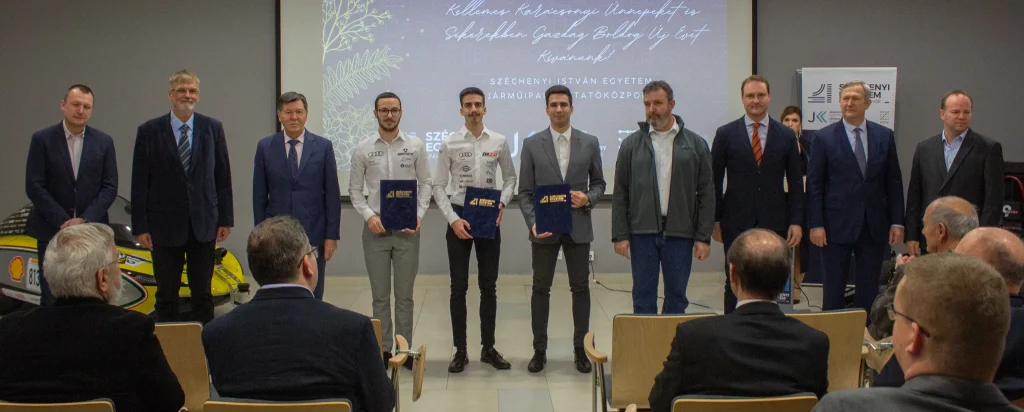
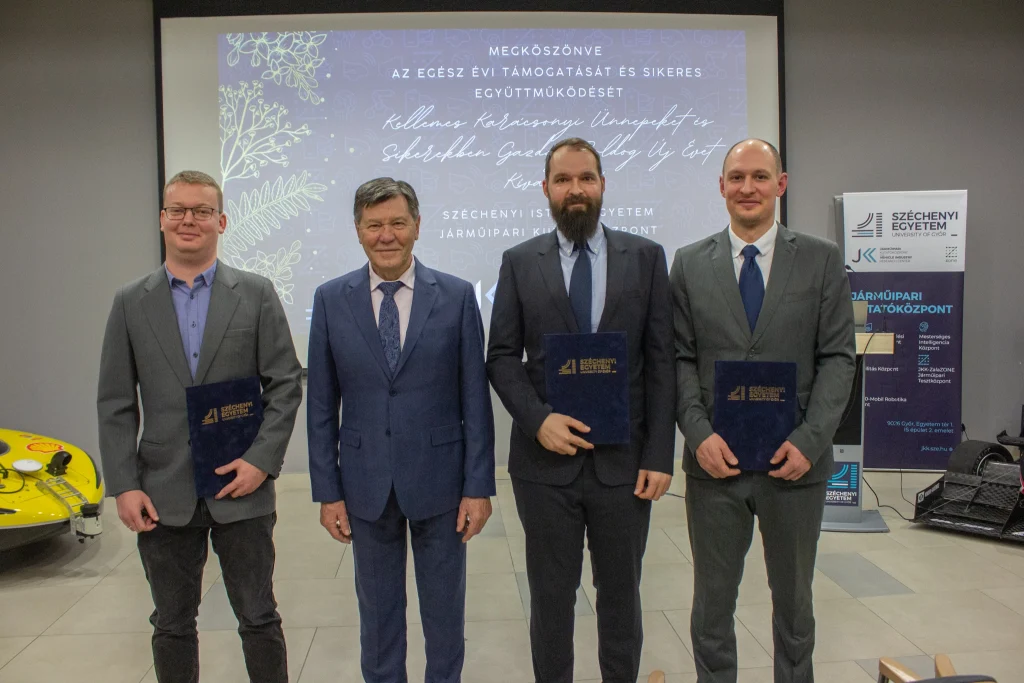
Several JKK staff members played an important role in supporting talented students. Three of them – Péter Kőrös, Dr Ernő Horváth and Dr Dániel Pup – received “Best Mentor” certificates of recognition from Professor Dr József Bokor, President of JKK.
Zoltán Szujó, President of the Hungarian National Motorsport Association (MNASZ) and former sports commentator, also attended the ceremony. In response to our question, he said that it is extremely important for Széchenyi István University’s student teams to be this active and successful.
“As President of MNASZ, I have made it one of my priorities to reach out to engineers and students working in or graduating from technical higher education and offer them opportunities for cooperation. With their help, we can also ensure the future supply of professionals working in the technical areas of motorsport.”
– he said.
Source: SZE News – Gábor Hancz